Hey everyone, and welcome back to my corner of the supermarket world – I’m Jake, here with my team’s Supermarket Refrigeration crew, and today we’re breaking down one of the questions we get literally every week from store owners, new managers, and even part-time staff who just moved into a bigger role: what’s the real difference between single-door and multi-door supermarket refrigeration display cases? A lot of folks see them and just think “fridges,” but there’s way more going on here that hits your utility bills, food freshness, foot traffic, and even your bottom line. Let’s cut the jargon and get into it – no boring textbook stuff, just what we’ve learned installing, servicing, and tweaking these units for hundreds of stores over the last 8 years. Supermarket Refrigeration
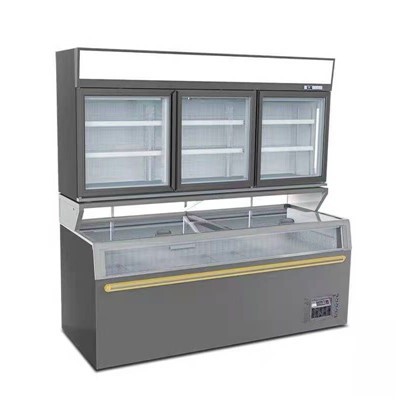
First, let’s start with the basics so we’re all on the same page. A single-door display case is, well, one door – usually a big glass door that swings open, or sometimes a pull-down sliding door, for smaller units. You’ll see these most often for things like pre-packaged deli meats, single-serve dairy, or grab-and-go sandwiches near checkout counters. Multi-door units, on the other hand, have two or more separate glass doors, all lined up in a row, usually longer and taller to hold way more product. Think milk coolers in the main grocery section, or frozen food cases down the snack aisle. But the differences don’t stop at how many doors they have – that’s just the surface.
Let’s talk about energy use first, because that’s a huge one for store owners who see utility bills climb every month. I know a guy who runs a 10,000 sq ft neighborhood market, and he used to swear his multi-door milk cooler was cheap to run… until we did a side-by-side check with his old single-door deli case. Here’s the tea: every time you open a door on a refrigerated unit, cold air spills out, and the compressor has to work extra hard to cool the unit back down. For single-door cases, you’re only opening one door at a time – even if you’re restocking, you’re not leaving the whole case open. It’s a smaller volume of cold air to lose. With multi-door cases, though, they’re bigger, hold way more cold air, and if a door gets left ajar accidentally (which happens more often than you think – customers fumbling with a bag of chips, staff rushing to restock), that cold air loss is way bigger. Our data? Single-door cases use about 15-20% less energy per cubic foot of storage than multi-door cases on average. Wait, but hold on – that’s not the whole story. If a multi-door case is well-maintained (seals are clean, compressor is tuned, doors close properly), the gap shrinks to like 5%, but even then, single-door is still more efficient for lower-volume, high-traffic small sections.
Then there’s food freshness, which is non-negotiable for any supermarket. Let’s be real – no one wants to sell a carton of milk that’s gone sour in 2 days, or a pack of sliced turkey that tastes off. Single-door cases have smaller interior spaces, so the temperature stays way more consistent. When you open one door, you’re not messing with the entire unit’s temperature – it bounces back fast. With multi-door cases, especially the older ones, there’s often “temperature drift” – the area near the first door might be 38 degrees, but the back area can climb to 45 because the cold air isn’t circulating evenly. That’s a problem for dairy, which needs to stay under 40 degrees to prevent bacteria growth. I had a customer a few months back who lost $1,200 in spoiled yogurt because his multi-door cooler had a bad fan, and the temperature at the back hit 48 degrees over a weekend. Single-door cases don’t have that issue as much because their smaller size lets the cooling system work evenly across the whole interior. Also, single-door cases usually have thicker insulation around the unit, so they hold cold longer if the power goes out – a big win for stores in areas with frequent storms.
Wait, but let’s not throw multi-door cases under the bus – they’re not bad. They’re made for high-volume, consistent stock. If you’re a mid-sized grocery store that sells 50 gallons of milk a week, a 4-door milk cooler is way more practical than four separate single-door cases. It takes up less floor space, lets customers scan all their dairy items without walking across the store, and you can restock faster because you’re pulling from a bigger, more organized space. But the trade-off there is energy and temperature consistency. I always tell people: pick what fits your store’s volume. If you’re a small convenience store that only keeps 10 gallons of milk, a single-door under-counter cooler works fine. If you’re a big supermarket moving 100 gallons a week, multi-door is a must for efficiency in space and restocking time.
Next up: customer experience. Supermarkets live on foot traffic, right? The way your display cases look and work affects how long people stay and what they buy. Single-door cases are great for impulse buys near checkout – the swing door makes it easy to grab a candy bar or a soda without fumbling with a big multi-door unit’s heavy handles. They’re also smaller, so you can tuck them into gaps near counters that would be useless for a big multi-door case. Multi-door cases, though, are eye-catchers. All that glass in a row is a billboard for your product – you can stack milk cartons, yogurt, cheese, all visible from across the aisle. They also have better lighting usually, because the longer design lets the lights spread evenly. A lot of customers tell us they pick a brand of milk just because it’s easier to spot through the multi-door case’s bright LEDs, whereas a single-door might have dimmer lights, so the product gets lost. That’s a huge point for sales – you’re not just buying a fridge, you’re buying a marketing tool.
Maintenance is another area where the two differ, and this is where a lot of store owners get blindsided. Single-door cases have fewer moving parts, right? Only one compressor, one set of door seals, one fan. So if something breaks, it’s usually a quick, cheap fix. I’ve had a single-door deli case come in for a $30 seal replacement that fixed a huge energy drain. Multi-door cases, though, have multiple doors, sometimes two compressors (one for the front, one for the back, to fix that temperature drift we talked about), more fans, and more seals. So maintenance costs add up. Last year, a store owner called us because his 4-door frozen case was making weird noises – turns out the back fan went out, and because it’s a multi-door unit, we had to pull the whole unit out to replace it, which cost almost $500 in labor alone. With a single-door case, we could fix the fan in 10 minutes right on the sales floor. Also, door seals on multi-door cases get worn out faster because they’re used more often – customers open and close those doors dozens of times an hour, whereas a single-door near a checkout might be opened a handful of times a day by staff restocking.
Wait, let’s talk about something that’s been getting a lot of press lately: sustainability. A lot of store chains are pushing for net-zero emissions, and refrigeration is one of the biggest energy hogs in a supermarket – like 40% of a store’s total energy use is from fridges and freezers. So single-door cases come out ahead here too, because they use less energy, which means lower carbon emissions. But here’s a catch: newer multi-door cases with smart technology – like automatic door closers, LED lighting that dims when no one’s around, and efficient compressors – can almost close that energy gap. We recently installed a set of smart multi-door coolers for a Whole Foods (don’t tell them I mentioned this, they’re regulars) and their energy use only ended up 3% higher than their old single-door cases. But those smart features add to the upfront cost – a single-door case costs around $1,200-$2,000, while a 4-door multi-door can run $3,500-$5,000. So if you’re thinking long-term, the extra cost of a smart multi-door might pay off in energy savings, but only if you’re moving enough product to justify it.
I should also mention a common misconception: people think multi-door cases are only for refrigerated items, but no, there are multi-door frozen cases too. Same rules apply – frozen food cases with multiple doors have more cold air loss, higher maintenance, but more storage. Single-door frozen cases are great for small convenience stores that sell ice cream or frozen dinners in low volume.
Let me throw in a real example to make this concrete. Last year, I worked with a small family-run market in Portland, OR. They had a 6,000 sq ft space, sold a mix of groceries, fresh produce, and deli items. Their old setup was a 3-door multi-door milk cooler and a single-door under-counter deli case. Their utility bill for refrigeration was $1,800 a month. We swapped out the multi-door milk cooler for two single-door coolers: one for milk, one for cheese and deli. Their refrigeration bill dropped to $1,450 a month – that’s $350 back in their pocket every month, which they used to hire a part-time stocker. The only downside? They had to move a few things around to fit the two single-door coolers, but it was worth it. A bigger supermarket chain in the same area, though, has 4-door multi-door cases for every section, and their refrigeration costs are $4,200 a month, but they sell way more product – so the trade-off works for them.
So where does that leave you, if you’re trying to pick between the two? Let’s break it down into quick takeaways:
- If you’re a small convenience store, market, or have a low-volume section (like checkout snacks, single-serve dairy), go for single-door. Cheaper upfront, lower energy, easier maintenance, fresher food.
- If you’re a mid-to-large supermarket, moving high volumes of product, need to save floor space, and want better product visibility, go for multi-door. Just make sure it’s a newer model with smart features to cut energy costs.
- If you’re somewhere in between, mix and match! I’ve seen stores use multi-door for their main dairy section and single-door for specialty items like craft ice cream or imported cheese that don’t need a huge cooler.
And one last thing – don’t forget about installation and service. A lot of people buy a cheap single-door case online and end up with a unit that doesn’t cool right because it’s not installed properly. Or a multi-door case that has a drafty seal because no one checked it during setup. That’s where we come in. We don’t just sell units – we install them, tune them up, do regular maintenance checks, and even help you pick the right size for your store based on your sales data.
If you’re a store owner, manager, or even a new kid on the block figuring out your refrigeration setup, hit us up to chat. We can walk through your space, your current bills, what you’re selling, and figure out what’s going to work best for you. No sales pitch, just straight talk – that’s how we’ve been doing it for years.
Refrigerated Display Case References:
- Supermarket Refrigeration Association. (2022). Energy Efficiency Standards for Retail Display Cases.
- Food and Drug Administration. (2021). Temperature Control Guidelines for Grocery Store Perishables.
- U.S. Department of Energy. (2023). Commercial Refrigeration Energy Use Benchmark Report.
Jinhua Kate Refrigeration Equipment Co., Ltd.
We are one of the most professional supermarket refrigeration manufacturers in China, also support customized service with low price. Please rest assured to wholesale bulk high quality supermarket refrigeration for sale here from our factory. If you have any enquiry about quotation, please feel free to email us.
Address: Room 101, No. 21, Southwest Sixth Road, Xin’an Village, Xin’an Community, Duohu Subdistrict, Jindong District, Jinhua City, Zhejiang Province
E-mail: 2528940364@qq.com
WebSite: https://www.katekool.com/
