If you’ve ever stared at a fully loaded air cargo pallet, wondering how those tall stacks of electronics, medical supplies, or pallets of retail goods stay secure 35,000 feet in the air, you’re not alone. As someone who’s run an air cargo pallet supply business for the last 12 years, I get questions about weight limits every single day—from small freight forwarders just starting out to major global logistics teams that should know the ins and outs of air cargo regulations. The truth is, it’s not a one-size-fits-all number, and cutting corners here isn’t just a bad idea—it’s a safety risk. Let’s break this down, no corporate jargon, just real talk about what actually determines how much an air cargo pallet can hold. Air Cargo Pallet

First, let’s start with the basics: what even is an air cargo pallet? For those who might not live and breathe this space, an air cargo pallet (often called a “unit load device” or ULD pallet, though technically ULDs also include containers) is a rigid, flat base designed to lock onto an aircraft’s cargo hold, replace the need for manual loading, and distribute weight evenly across the plane’s floor. Unlike wooden pallets you’d use at a local warehouse, these are built to withstand the extreme conditions of flight: rapid changes in pressure, extreme temperatures, and sudden turbulence or abortive takeoffs. When I first opened my supply business, I thought all pallets held the same weight—until I got a call from a client who’d overloaded a pallet and damaged the aircraft’s cargo floor. That mistake cost them $12,000 in repairs and a week of delayed shipments, and it taught me right away that weight limits aren’t just a number printed on a box—they’re non-negotiable for safety and reliability.
Now, the core question: how much weight can they actually hold? The short answer is, it depends on three key factors: the pallet’s type, the aircraft it’s being loaded on, and global aviation safety standards. Let’s start with pallet types, because that’s where most people mix things up. The two most common air cargo pallets you’ll find in commercial aviation are the AMA pallet and the PTP pallet. The AMA, or Aircraft Maintenance Manual-approved pallet, is the workhorse of the industry. Its standard dimensions are 88 inches long by 125 inches wide (that’s the standard “main deck” size for most Boeing and Airbus wide-body jets), and its maximum static load capacity—meaning the weight it can safely hold when stacked or sitting still on the tarmac or in a hangar—is 10,000 pounds. Wait, hold on—doesn’t that mean you can load 10,000 pounds of goods on it? Not exactly. Because then you have to account for the pallet itself, which weighs about 120 pounds for a standard AMA. So the actual payload you can put on top is around 9,880 pounds. But here’s the catch: that’s only the pallet’s own limit, as set by its manufacturer and aviation regulators. You still have to check what the aircraft can handle.
That’s where the second factor comes in: the aircraft type. A pallet loaded on a Boeing 737’s main deck has a different limit than the same pallet loaded on an Airbus A380’s lower cargo hold. The 737’s main deck has a maximum load-bearing capacity of 125 pounds per square foot, while the A380’s lower hold can handle up to 150 pounds per square foot. Let’s do the math for that standard 88×125 inch AMA pallet: that’s 11,000 square inches, or ~76.4 square feet. Multiply that by 125, and you get 9,550 pounds total for the 737. The same pallet on the A380’s lower hold? 11,460 pounds total. Now, subtract the pallet’s 120-pound weight, and your payload is 9,430 pounds for the 737 and 11,340 pounds for the A380. Oh, and if you’re loading a smaller narrow-body jet, like a Boeing 757? The main deck limit there is even lower, around 110 pounds per square foot, so your total pallet load comes out to about 8,400 pounds, for a payload of just over 8,280 pounds. I see so many forwarders skip this step—they assume the pallet’s limit is the hard number, not accounting for the aircraft’s floor. That’s how you get overloaded pallets and damaged cargo, or worse, fines from aviation authorities.
The third, and most important, factor: global safety standards. The Federal Aviation Administration (FAA) in the U.S., the European Union Aviation Safety Agency (EASA), and the International Civil Aviation Organization (ICAO) all set non-negotiable rules for air cargo pallet limits. These standards aren’t just made up to be annoying—they come from decades of investigating cargo-related incidents. For example, in 2019, a cargo flight from Miami to Lima crashed during takeoff because an overloaded pallet shifted, throwing off the aircraft’s center of gravity. The investigation found that the forwarder had loaded 12,000 pounds of goods onto an AMA pallet intended for 10,000 pounds, and had ignored the 737’s main deck weight limit. That crash killed all three crew members and led to strict new rules for pallet marking and loading checks. I reference that incident all the time with my clients—because if one story can save a company from that kind of loss, it’s worth sharing.
Wait a second—what about custom pallets? I get a lot of requests from clients who say, “We need a pallet that can hold 15,000 pounds, no questions asked.” Is that possible? Yes, but it’s not a standard pallet. For heavy cargo like industrial equipment or large machinery, we manufacture reinforced heavy-duty pallets, often called “air cargo heavy pallets,” which have extra steel reinforcements along the edges and crossbars. These pallets have a static load capacity of up to 20,000 pounds—way higher than standard models. But again, you still have to match that to the aircraft. Even if your heavy pallet can hold 20,000 pounds, a small regional jet’s cargo hold can only handle 10,000 pounds total for a single pallet, so you can’t fully use that heavy pallet’s capacity. The extra strength is only useful if you’re loading it onto a wide-body jet with a high floor limit, or if you’re stacking pallets on top of it. Oh, right—stacking! I almost forgot that crucial detail. When pallets are stacked in the aircraft’s lower hold, the bottom pallet has to support the weight of all the pallets above it. So if you have three standard AMAs stacked, each holding 10,000 pounds, the bottom pallet has to hold 30,000 pounds total (including its own weight). That’s why stacking is restricted on most narrow-body jets—you can only stack two pallets on a 777, and sometimes only one on smaller planes. If you stack too many, you risk the bottom pallet’s frame cracking or breaking during flight, which can send tons of cargo crashing into the aircraft’s hold.
Now, let’s talk about common mistakes I see all the time, because even experienced logistics teams get tripped up here. First, not verifying the pallet’s marking. Every compliant air cargo pallet has a stenciled number on the side that says its maximum static load capacity, plus a serial number and the approval from EASA or the FAA. Last year, a client bought cheap, unapproved pallets from a foreign supplier that had fake weight markings. They loaded 10,000 pounds of medical supplies onto them, and one pallet split open mid-flight, spilling vaccines all over the cargo hold. The vaccines were ruined, the client lost a $200,000 order, and they had to pay for a full aircraft hold cleaning and delay. Never buy a pallet that doesn’t have a clear, official marking for its load capacity—those markings are the result of rigorous testing, including drop tests, pressure tests, and load tests that simulate flight conditions.
Another common mistake is forgetting to account for load distribution. A pallet’s weight limit isn’t just a total number—it’s about how that weight is spread out. If you pile 10,000 pounds of dense cargo like steel parts into a tight block in the center of the pallet, you’re putting all the pressure on the middle of the pallet’s frame, which can bend or crack even if you’re under the total weight limit. The FAA requires that you distribute weight evenly across the pallet, and that any over 500 pounds is placed on a pallet with edge supports to distribute the load along the pallet’s beams. I always tell my clients: if you can’t spread the load evenly, add extra pallets or split the shipment into smaller, lighter loads. It’s better to split a shipment than to risk a damaged pallet, lost cargo, or a grounded flight.
What about dynamic load? That’s the weight a pallet can handle during movement—like during takeoff, landing, or turbulence. Dynamic load is always lower than static load, usually around 70% of the static number. So a pallet with a 10,000-pound static limit can only handle 7,000 pounds dynamically, because sudden forces can add extra weight to the pallet’s frame during flight. That’s another reason why you should never max out a pallet’s static limit—you have to leave room for dynamic forces. I learned this early on when a client loaded a pallet to exactly 10,000 pounds for a transatlantic flight, and turbulence hit. The pallet’s frame buckled, and the cargo shifted, causing the aircraft to make an emergency landing in Newfoundland. No one was hurt, but the client paid $50,000 in diversion fees and cargo storage costs.
Now, let’s get into the numbers to make this concrete, because I know you want hard facts. For standard, FAA/EASA-approved AMA pallets (the most widely used), here’s the breakdown:
- Static load capacity: 10,000 lbs total (including pallet weight)
- Dynamic load capacity: 7,000 lbs total (including pallet weight)
- Payload (cargo you can put on top): ~6,880 lbs for narrow-body jets, ~9,000 lbs for wide-body jets
For heavy-duty reinforced pallets, used for high-weight cargo: - Static load capacity: up to 20,000 lbs total
- Dynamic load capacity: up to 14,000 lbs total
- Payload: up to 12,000 lbs for wide-body jets, depending on floor limits
For smaller pallets, like the LD3 pallets used in regional jets: - Static load capacity: 5,000 lbs total
- Payload: ~4,800 lbs, for use on smaller aircraft
But remember—these numbers are only the starting point. You always have to cross-reference with the aircraft’s Unit Load Device (ULD) specifications, which are published in the aircraft’s Maintenance Manual. I keep a digital copy of the most common ULD specs on file for all my clients, so they don’t have to hunt for them. That’s a small service, but it saves them hours of research and avoids costly mistakes.
Another thing that’s often overlooked: temperature and altitude. When aircraft fly at 35,000 feet, the temperature in the cargo hold can drop to -65 degrees Fahrenheit. Extreme cold makes metal more brittle, which can reduce a pallet’s load capacity by up to 10% in some cases. So when you’re shipping temperature-sensitive heavy cargo, like frozen food or medical devices, you have to account for that temperature-related strength loss. I worked with a cold chain logistics company last year that was loading pallets of frozen seafood onto a flight to Tokyo. They’d loaded 9,500 pounds on a standard AMA, not accounting for the -50 degree Fahrenheit hold temperature, and the pallet’s frame cracked mid-flight, spilling seafood all over the hold. After that incident, I started offering temperature-tested pallets for cold chain shipments, which are treated to maintain their strength in extreme cold. It’s a small upgrade, but it’s saved my clients thousands in damaged cargo.
Now, if you’re a freight forwarder, logistics manager, or business owner looking to ship air cargo, what does all this mean for you? First, don’t guess. Pull the pallet’s official marking, confirm the aircraft’s floor load limit, calculate your payload with 10-15% extra buffer for dynamic forces and temperature, and distribute your load evenly across the pallet. If you’re working with a supplier, ask them to provide test certificates for their pallets—any reputable supplier will have these on hand. If you’re looking for pallets, make sure they’re compliant with ICAO, EASA, and FAA standards, because unapproved pallets can’t be used on international flights.
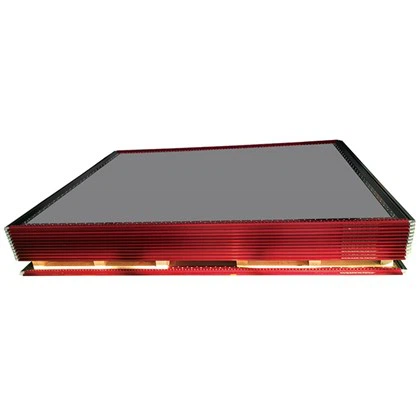
As someone who’s been in the air cargo pallet business for over a decade, I’ve seen firsthand what happens when weight limits are ignored. It’s not just broken pallets—it’s lost revenue, damaged cargo, delayed shipments, and even safety risks to crews and passengers. That’s why I never cut corners when it comes to supplying compliant, tested pallets, and I always take the time to educate my clients on the rules, not just sell them a product. If you’re tired of guessing about pallet weight limits, need help matching pallets to your specific aircraft and cargo, or want to source compliant, reliable air cargo pallets for your next shipment, I’m here to help. We work with businesses of all sizes, from small startups to global logistics companies, and we can provide custom solutions for heavy cargo, cold chain shipments, and everything in between. Reach out to connect with our team to discuss your needs and get a quote tailored to your requirements.
Air Cargo Container References
Aircraft Load Manual, Boeing 737-800, 2022
European Union Aviation Safety Agency (EASA) Special Airworthiness Information Bulletin (SAIB) 002-2021: Unit Load Device (ULD) Weight Capacity Verification
International Civil Aviation Organization (ICAO) Manual on the Safe Transport of Cargo by Air, 11th Edition, 2020
Federal Aviation Administration (FAA) Advisory Circular 120-94: Air Cargo Security and Safety, 2019
National Transportation Safety Board (NTSB) Aircraft Accident Report AAR19MA017, 2020
Wuxi Aviation Ground Equipment Co., Ltd.
Wuxi Aviation Ground Equipment Co., Ltd. is well-known as one of the leading air cargo pallet manufacturers and suppliers in China. Please rest assured to buy or wholesale discount air cargo pallet for sale here from our factory. For price consultation, contact us.
Address: No.18 Dingxiang East Road, Hudai Town, Binhu District, Wuxi, Jiangsu, P.R. China
E-mail: sales@wxagecl.com
WebSite: https://www.wxagecl.com/
