Hey there! As a supplier of grinding parts, I’ve seen firsthand the differences between internal grinding and external grinding. It’s crucial to understand these differences, whether you’re in the manufacturing business or just curious about the grinding world. So, let’s dive right in and break it down! Grinding Parts

What is Grinding Anyway?
Before we get into the differences, let’s quickly talk about what grinding is. Grinding is a machining process that uses an abrasive wheel to remove material from a workpiece. It’s a super precise way to shape and finish parts, and it’s used in all sorts of industries, from automotive to aerospace.
External Grinding
External grinding is like the big, showy sibling. It’s all about grinding the outer surfaces of parts. You’re looking at cylinders, shafts, and other parts where you need to get that outer diameter just right.
How Does It Work?
In external grinding, the workpiece rotates while the grinding wheel comes into contact with the outer surface. The grinding wheel spins at a high speed and grinds away a tiny bit of material with each pass. The mechanism can be adjusted to control how much material is removed and how smooth the surface finishes.
Why Use External Grinding?
There are a ton of reasons. First off, it’s great for achieving tight tolerances on the outer dimensions of parts. If you’re making a shaft for an engine, for example, it needs to be just the right size so that it fits perfectly into its housing. External grinding can get you that precision.
It’s also good for improving the surface finish. A smooth outer surface can reduce friction, which is crucial in applications where parts are moving against each other. And let’s not forget about aesthetics. Sometimes, a well – ground outer surface looks better and gives your product a more professional finish.
Example Applications
External grinding is used all over the place. In the automotive industry, it’s used to grind crankshafts, camshafts, and axles. In the machinery industry, it’s used for making precision rods and rollers. And in the tool – making industry, it helps to shape the outer edges of cutting tools.
Internal Grinding
Now, internal grinding is a bit more of a hidden gem. It’s all about grinding the inner surfaces of parts, like holes or bores.
How Does It Work?
Internal grinding is a bit trickier than external grinding. The grinding wheel has to be small enough to fit inside the hole or bore. The workpiece usually rotates, and the grinding wheel moves in and out along the axis of the hole while spinning. It’s a slow and steady process to ensure that the inner surface is ground evenly.
Why Use Internal Grinding?
One of the main reasons is to achieve accurate hole sizes. If you’re making a part that needs to have a hole that fits a specific component, internal grinding can get you that precise diameter. It also helps to improve the surface finish inside the hole. A smooth inner surface can reduce wear and tear on any parts that fit inside the hole.
Example Applications
Internal grinding is used in the production of engine blocks, where it’s used to grind the cylinder bores. It’s also used in the manufacturing of hydraulic cylinders, where the inner surface of the cylinder needs to be extremely smooth and precise. And in the watchmaking industry, it’s used to create the small holes in watch components.
Key Differences
1. Workpiece Access
The most obvious difference is the part of the workpiece that’s being ground. With external grinding, you have easy access to the outer surface. You can see what’s going on, and it’s generally easier to set up the grinding operation. In contrast, internal grinding requires the grinding wheel to fit inside a hole or bore, which can be a real challenge. You need special tools and setups to get the wheel in there and make sure it grinds the surface evenly.
2. Wheel Size and Shape
External grinding wheels can be relatively large and come in a variety of shapes. You can use wheels with different profiles to create different outer shapes on the workpiece. For internal grinding, the wheels have to be small and often have a specific shape to fit the inner geometry of the hole. This means that internal grinding wheels are more specialized and can be more expensive.
3. Material Removal Rate
External grinding usually has a higher material removal rate. Since you have more space to work with and can use larger wheels, you can remove more material in a shorter amount of time. Internal grinding, on the other hand, is a slower process. You have to be more careful because the wheel is small, and there’s less room for error.
4. Precision and Tolerance
Both processes can achieve high precision, but they have different challenges. In external grinding, it’s easier to control the outer dimensions because you have a clear view of the surface. In internal grinding, achieving tight tolerances on the inner diameter can be more difficult due to limited access and the small size of the grinding wheel.
5. Surface Finish
External grinding can produce a very smooth surface finish on the outer surface. The larger wheel and more straightforward grinding action allow for better control over the finish. Internal grinding can also produce a smooth surface, but it can be more challenging to achieve a consistent finish due to the confined space and the need to move the wheel in and out of the hole.
Which One Should You Choose?
The choice between internal and external grinding depends on your specific needs. If you’re working on the outer surface of a part and need to remove a lot of material quickly or achieve a specific outer shape, external grinding is the way to go. If you’re dealing with holes or bores and need to get a precise inner diameter and a smooth inner surface, internal grinding is your best bet.
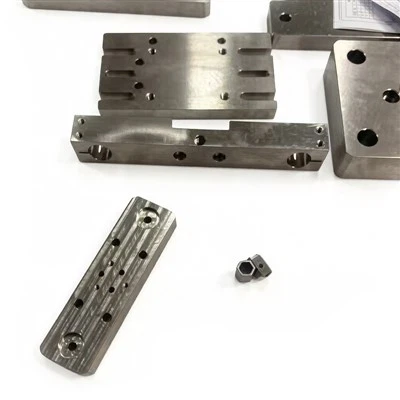
As a grinding parts supplier, I’ve helped many customers choose the right grinding process for their projects. Whether you’re a small – scale manufacturer or a large – scale industrial company, we’ve got the expertise to guide you through the process and provide you with the best grinding parts for your needs.
CNC Turning Parts If you’re in the market for high – quality grinding parts, whether it’s for internal or external grinding, don’t hesitate to reach out. We can help you find the right parts, offer advice on the best grinding techniques, and ensure that your projects run smoothly. Contact us today to start a conversation about your grinding needs!
References
- "Machining Processes and Machine Tools" by Amitabha Ghosh and Ashok Kumar Mallik
- "Manufacturing Engineering and Technology" by Serope Kalpakjian and Steven R. Schmid
- "Grinding Technology: Theory and Applications of Machining with Abrasives" by Stephen M. C. Lucca, Peter J. Blau, and William B. Rowe
Suzhou Huaquan Electromechanical Manufacturing Co., Ltd.
As one of the leading grinding parts manufacturers in China, we warmly welcome you to buy bulk customized grinding parts made in China here from our factory. If you have any enquiry about pricelist and free sample, please feel free to email us.
Address: No.7550 Mudong Road, Hengjing Town, Wuzhong District, Suzhou City, Jiangsu Province, China
E-mail: Huaquan2005@outlook.com
WebSite: https://www.huaquancnc.com/
