If you’re running a misting system parts supply business, you probably already know the grind of off-season lulls—when pools are closed, patios go quiet, and folks put their cooling setups on hold. But here’s the thing that trips up a lot of our clients, and honestly, even some of our newer team members when we test new inventory: storing misting system parts wrong is how you end up with clogged nozzles, cracked lines, or corroded fittings come spring. I’ve seen it a hundred times over the past 7 years I’ve been sourcing and shipping these parts, and it’s way more preventable than people make it sound. Misting System Parts

Let’s break this down like we chat to a regular client over the phone, no stuffy industry jargon. First, let’s get one thing straight: your parts aren’t just random plastic, metal, or rubber bits. They’re precision components, designed to push water (or sometimes coolants) through tiny, super specific openings. Mess with their environment, and they lose that edge. Let’s start with the most common parts you’d store, since that’s what actually matters for your inventory.
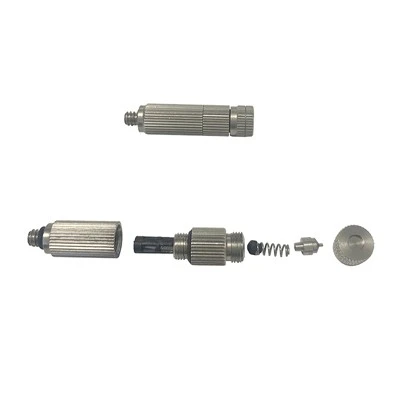
Nozzles, for example. These are the tiny things that make your mist, right? They have orifices as small as 0.15 millimeters—smaller than the tip of a standard sewing needle. If you leave them sitting around out in the open, even a tiny dust particle from a garage, a speck of pollen from a nearby oak tree, or even a drop of leftover hard water can get stuck in there, and next season, you’ll get a dribble instead of a fine mist. We’ve had clients send back nozzles that “stopped working” after 3 months in their shed, and 9 times out of 10, it’s just a clogged orifice from bad storage. How do we fix that? First, never leave nozzles loose. We recommend storing them in the original plastic trays or small, labeled plastic bins with tight lids. If you toss the original packaging (we’ve all done that when unpacking a big shipment), wrap them individually in food-grade plastic wrap or seal them in small ziplock bags with a tiny bit of distilled water. Tap water has minerals, so that’s a no-go—distilled keeps the metal components from spotting and the orifices from drying out and cracking. Pro tip: label those bags with the nozzle size (0.3mm, 0.5mm, etc.) because mixing sizes is a nightmare when you’re rummaging for a system build later.
Next up: tubing. Most misting systems use polyethylene (PE) tubing, sometimes called PVC, but PE is way more common for its flexibility. Leaving tubing coiled loosely on a garage floor or hanging on a nail for months? That’s a fast track to kinks. Once a PE tube is kinked permanently, water can’t flow through it evenly, and you’ll get dead spots in your mist line. Also, UV light—if you leave it out in the sun, it gets brittle, turns yellow, and cracks. We learned this the hard way a couple years back: a client stored 500 feet of ½” PE tubing leaning against their shop wall for the winter, and by spring, half of it had hairline cracks from UV exposure. So how to store it? After you flush out all the leftover water (super important—standing water in tubing breeds bacteria and can freeze if it gets cold), coil it neatly into loose, figure-8 coils. Don’t wrap it tight into a super small circle—that creates a permanent kink. Then, store it in a cool, dark place, like a closet, a plastic storage bin with a lid, or even a garage shelf that’s covered. Avoid any place where it’ll get direct sun for more than a few hours a day. Also, if you have different diameters of tubing, label the coils with a piece of masking tape and a marker—again, saves so much time when you’re putting together a system.
Then there are the fittings—elbows, tees, couplings, and those quick-connect adapters. These are usually made of metal (brass is the most common, sometimes stainless steel) or plastic. Metal fittings? They rust if they get damp and sit in a humid place. Plastic ones? They can get brittle if it’s too cold, or warp if it’s too hot. Don’t just dump fittings in a box with no organization. We use small divided plastic bins for fittings—each bin labeled for a type: ¼” quick connects, ½” elbows, etc. And if you have metal fittings that were just used with water, dry them off first before storing. A quick wipe with a microfiber cloth, or even a 10-minute blast of compressed air to get any trapped water out of the threads, prevents rust. Humidity is the enemy here—if your garage is super damp, toss a small desiccant packet (the ones that come in shoe boxes or supplement bottles) into each bin. They absorb moisture, and trust me, they’re cheap. We include a handful in every big shipment of fittings now, just because clients kept asking for them.
Wait, what about pumps? A lot of people forget the pump, but it’s the heart of the misting system. Storing a pump wrong is a quick way to ruin a $200 component. First, make sure you completely drain all water from the pump’s housing and the lines connected to it. If water freezes inside the pump, it expands, cracks the housing, or busts the impeller blades. We’ve seen a pump blow a hole in its side after one cold winter because the owner forgot to drain it. Then, wipe the exterior clean—any dirt or grime can get into the seals over time. Store the pump in a dry, temperature-stable place. Don’t leave it in a unheated garage if you live somewhere that gets below freezing, and don’t set it on the floor where it can pick up water from a leaky floor or a snowbank. We usually wrap our smaller pumps in a soft cloth and put them in a plastic bin with a lid, away from other parts that could scratch the motor housing.
Now, let’s talk about common mistakes that people make that even seasoned guys slip up on. First, mixing parts. If you store your nozzles with your old tubing, or mix ¼” fittings with ½” tubing, you’re wasting so much time later. I once spent 2 hours digging through a bin of loose parts trying to find the right size coupling for a client’s system, and it was all because I didn’t label. Second, using the wrong containers. A cardboard box? No, it absorbs moisture, and mice or bugs can chew through it and get into your parts. Plastic is way better, airtight if possible. Third, skipping the flush. So many people just turn off the system and leave water in all the lines over the off-season. Standing water is bad for every part—it clogs nozzles, eats away at metal fittings, and breeds yucky bacteria that can get into your water supply when you turn it back on. We tell every client: take 10 minutes after the last use to flush all lines with a little bit of compressed air (you can get a cheap one at any hardware store) to blow out every drop. Even the small bits trapped in the corners of the tubing.
Wait, what about if you’re a supplier, not a end user? A lot of our clients are other small businesses that store bulk parts for their inventory, not just their personal systems. That’s a little different. For bulk inventory, we recommend organizing by part type and size, storing pallets of tubing off the floor (no damp ground = no rust or mold), and keeping fast-moving parts (like 0.3mm nozzles, quick connects) in easily accessible bins near the loading dock. We also do a quarterly inventory check for our own warehouse, because even stored parts can go bad—nozzles can get old if they’re sitting around for 2+ years (the orifices can degrade from water exposure), and tubing can get brittle if it’s stored for too long. So for bulk inventory, rotate stock: use the oldest parts first, so you don’t end up with expired parts on your shelves.
Another thing: temperature and humidity. If you live in a place with extreme seasons—super hot summers, freezing winters, or super humid coastal areas—you have to adjust your storage. For cold areas: never let parts freeze. Tubing gets brittle, pumps crack, metal fittings expand and split. For humid areas: add more desiccants, store bins off the floor, maybe even use a dehumidifier in your storage space. For super hot areas: don’t store parts in a attic or a hot garage, because the heat breaks down plastic and rubber seals. We once had a client in Florida store a whole order of nozzles in their attic, and by the time spring came, half the seals on the nozzles were melted, and they couldn’t be used. Oops.
Let’s also cover what not to do, just to be clear. Don’t:
- Leave nozzles out in open air for weeks—pollen and dust are your enemy.
- Coil tubing super tight into a small circle—permanent kinks = no mist flow.
- Store metal fittings in a damp box—rust is a pain to work with and can clog threads.
- Forget to drain pumps and lines—freezing water = expensive repairs.
- Mix parts without labeling—wasting time when you need them most.
At the end of the day, storing misting parts is just about being intentional, right? It’s not rocket science, but it’s the little details that make all the difference between a system that works perfectly next season, and one that gives you headaches and extra costs. If you’re buying parts for your own system, or stocking up for your business, we’ve got all the storage-friendly parts you need—from individual nozzles to bulk tubing, bins, and even desiccant packets. Whether you’re a small business owner looking to stock inventory, or a homeowner prepping your personal system for winter, we can help you pick the right parts and answer any storage questions you might have. If you want to chat through your specific setup, or order the parts you need for next season, just reach out to us to get started on your next order.
Low Pressure Misting Nozzles Reference:
- Misting System Maintenance Guide. International Misting Association, 2022.
- Polyethylene Tubing Storage Best Practices. American Society of Plumbing Engineers, 2021.
- Corrosion Prevention for Brass Fittings. National Association of Corrosion Engineers, 2020.
Zhuji Haihang Misting Equipment Co., Ltd.
Zhuji Haihang Misting Equipment Co., Ltd. is well-known as one of the leading misting system parts manufacturers and suppliers in China. We warmly welcome you to buy high quality misting system parts for sale here from our factory. For more information, contact us now.
Address: No.462 Zhongyang Rd., Diankou Town, Zhuji City, Zhejiang Province, China
E-mail: info@hmisting.com
WebSite: https://www.hmistingsystem.com/
