If you’ve ever had a servo motor fail mid-production line, or watched a precision robot arm stutter during a delicate pick-and-place task, you might not have guessed the culprit is hiding in one of its smallest components: the bearings. As a servo motor bearings supplier who’s spent 12 years on the floor troubleshooting with OEM engineers and maintenance teams, I can tell you that bearing material is not a “one-size-fits-all” afterthought—it’s the quiet backbone of consistent servo performance, and picking the wrong material can turn a $10,000 motor into a $500 paper weight faster than you’d expect. Servo Motor Bearings
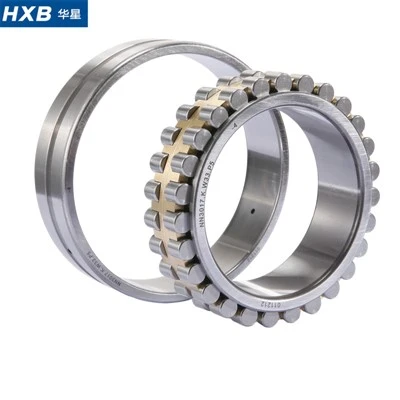
Let’s start with what makes servo bearings different from, say, the bearings in a household washing machine. Servo motors are precision workhorses—they need to spin smoothly at speeds ranging from 1,000 to 20,000+ RPM, deliver instant, repeatable torque, and handle extreme loads (radial, axial, and even moment loads) without slipping or wearing out. Whether they’re powering a CNC machine’s spindle, a collaborative robot’s joint, or a packaging line’s high-speed labeler, any tiny vibration, friction, or play in the bearing directly translates to lost precision, shortened motor life, and unplanned downtime that costs manufacturing facilities thousands of dollars an hour.
Over the years, I’ve watched engineers default to standard chrome steel bearings out of habit, only to come back a year later frustrated because their application was too demanding. Today, the market offers a range of bearing materials—each with unique properties that shift servo performance in measurable ways. Let’s break down the four most common materials we work with, and how each impacts speed, torque accuracy, heat, and overall lifespan.
First up: standard chrome steel (SAE 52100). This is the workhorse of general industrial bearings, used in everything from power tools to mid-range servo motors. It’s affordable, easy to machine, and has a decent hardness (around 60 HRC) that resists surface wear for most light-to-moderate applications. But here’s the catch for servos: chrome steel has a high carbon content, which makes it prone to corrosion if exposed to even tiny amounts of moisture, dust, or lubricant breakdown. I remember a client at a food packaging plant who installed chrome steel bearings in their servo-driven conveyor motors—within 18 months, the plant’s high humidity and food-grade cleaning sprays caused pitting on the bearing races. The pitting created micro-vibrations that threw off the motor’s encoder readings, leading to misaligned packaging and 20+ hours of unplanned downtime. Chrome steel also generates more friction at high speeds than other materials. When a servo is running at 15,000 RPM, even a 10% higher friction coefficient means the motor has to work harder to maintain torque, wasting energy and raising operating costs. For applications that don’t have extreme speed or harsh conditions, chrome steel is still a solid choice—but it’s not the best for precision or long lifespans in tough environments.
Next, we have stainless steel, specifically 440C. This is the go-to upgrade for servos that need corrosion resistance. 440C has a hardness of around 58 HRC when heat-treated, and its chromium content (over 16%) creates a passive oxide layer that repels moisture, chemicals, and even mild cleaning agents. We supply 440C bearings to a lot of medical device manufacturers and marine equipment builders, where servo motors are exposed to sterile cleaning solutions or salt spray. But stainless steel comes with a tradeoff: it’s harder than chrome steel, but it’s also less stiff and has a lower thermal conductivity. What does that mean for servo performance? At high speeds, stainless steel bearings run hotter than chrome steel. That extra heat can cause the bearing’s internal components to expand unevenly, leading to increased play and reduced torque accuracy over time. I had a customer in the semiconductor industry a few years back who used 440C bearings in a servo motor for a wafer handling robot—while the bearings survived the cleanroom’s harsh chemicals, the excess heat at 18,000 RPM made the motor’s position repeatability drop from ±0.02mm to ±0.08mm, which was enough to ruin $10,000 silicon wafers per run. For corrosion-heavy applications, stainless steel is a must, but it’s important to balance that with speed and heat requirements.
Then there’s silicon nitride (Si3N4) ceramic. This is the material that changed the game for high-performance servos, and it’s become our fastest-growing product line over the last five years. Silicon nitride is a technical ceramic, not a metal, and its properties are tailor-made for servo precision. First, it’s 40% lighter than steel—so when it’s spinning at 20,000 RPM, it generates way less centrifugal force, which reduces stress on the motor shaft and the bearing’s inner and outer races. Second, it has an extremely low friction coefficient—about 1/3 that of steel bearings, even when unlubricated. That lower friction means the motor doesn’t have to work as hard to maintain torque, leading to 10-15% lower energy consumption, according to independent test data I’ve reviewed. Third, silicon nitride has a high thermal conductivity and a low coefficient of thermal expansion, so it barely expands as temperatures rise during high-speed operation. That means no uneven expansion, no play, and consistent performance, even at 25,000 RPM. I recently had a customer in the aerospace industry who was testing a servo motor for a satellite’s solar panel positioning system—they were using Si3N4 ceramic bearings because the motor needed to maintain ±0.01mm accuracy for 15 years in vacuum and extreme temperature swings (from -40°C to 120°C). The ceramic bearings outperformed their previous chrome steel bearings by 70% in both torque consistency and lifespan during testing. The only downside? Silicon nitride is more expensive upfront than steel or stainless steel. But for applications where precision, speed, and longevity are non-negotiable, the cost savings from less downtime and longer motor life far outweigh the initial investment.
Wait, I should mention a fourth material: hybrid bearings, which pair a silicon nitride ceramic ball with a steel inner and outer race. This is a middle ground that we recommend for many medium-to-high-speed servos. The ceramic ball still delivers the low weight and low friction benefits, while the steel races handle the heavy loads better than all-ceramic bearings (which can be brittle under extreme axial load). Hybrid bearings are perfect for servo motors in applications like high-speed packaging lines or CNC machine spindles, where speed is high but load isn’t quite at aerospace levels. I had a food processing client who switched from all-chrome steel to hybrid bearings in their 12,000 RPM servo-driven bottle fillers—they saw a 25% reduction in maintenance costs because the bearings ran 20°C cooler, and their fill accuracy improved by 0.5%, which cut product waste by thousands of dollars a month.
Now, it’s not just about the base material—how the material is processed makes a huge difference too. For example, a chrome steel bearing that’s ground to a 16 micro-inch surface finish will run smoother and last longer than one ground to a 32 micro-inch finish, especially at high speeds. With ceramic bearings, the manufacturing process (isostatic pressing, sintering, lapping) affects the material’s porosity and hardness—porous ceramic bearings can crack under load, while high-density, precision-lapped ceramic bearings deliver the consistent performance servos need. I always tell engineers that when you’re specifying bearing materials, you also need to ask about surface finish, internal clearance, and lubrication compatibility—all of which work with the material to shape performance.
One common mistake I see is engineers over-specifying or under-specifying material. For example, a small servo motor driving a door on an office robot doesn’t need an expensive ceramic bearing—it would work just fine with a quality chrome steel bearing that’s properly lubricated. On the flip side, a high-speed CNC spindle using chrome steel bearings will wear out in half the time, leading to costly downtime. The key is matching the bearing material to the servo’s specific operating conditions: speed, load, temperature, environment, and required precision.
Let’s talk real-world data to back this up. Last year, we collaborated with a group at a manufacturing university to test the performance of the four bearing materials in identical 2kW servo motors, running at 10,000 RPM under constant radial load for 1,000 hours. The results? Chrome steel bearings showed 12% wear on the raceways, a 8% drop in torque output, and a 25°C rise in operating temperature. Stainless steel bearings had 8% wear, a 5% torque drop, and a 22°C temperature rise. Hybrid bearings had 3% wear, a 2% torque drop, and a 15°C temperature rise. All-ceramic silicon nitride bearings had less than 1% wear, a 0.5% torque drop, and a 12°C temperature rise. That test drove home something I’ve seen in the field for years: the right bearing material doesn’t just extend motor life—it preserves the precision and torque consistency that servo motors are built to deliver.
As a bearings supplier, our job isn’t just to sell parts—it’s to help our clients pick the right material for their application, even if that means recommending a cheaper option that fits their needs instead of pushing the most expensive ceramic bearing. We’ve worked with everything from small startup robotics companies to Fortune 500 manufacturers, and we’ve learned that the best servo bearing solution is always the one that balances performance, cost, and reliability for the specific job.
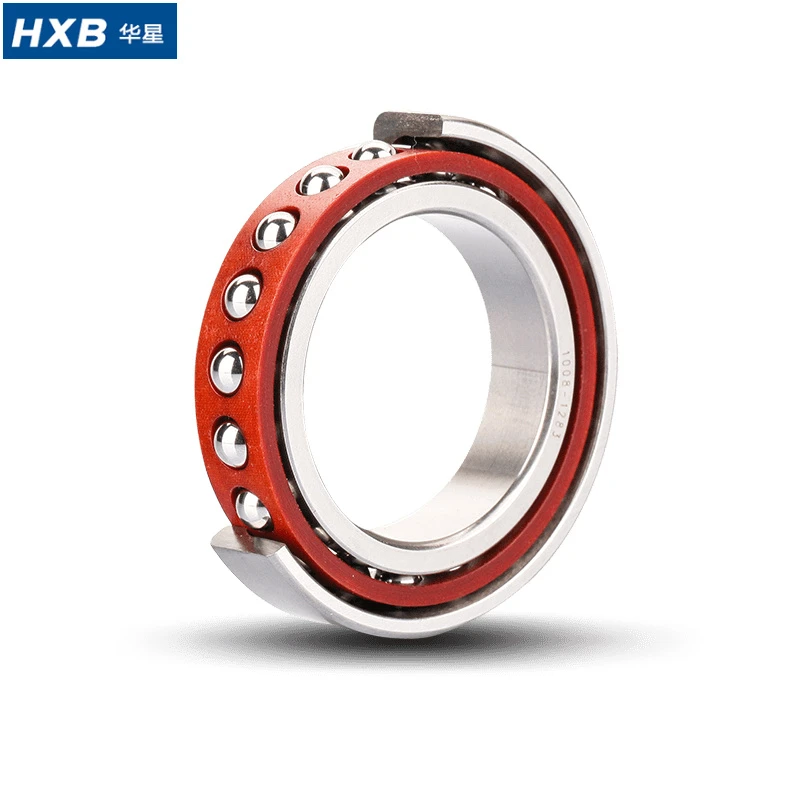
If you’re dealing with servo motor issues—unexpected downtime, poor precision, high energy costs—or you’re specifying new servo motors and want to make sure your bearings are set up for long-term success, I’d be happy to help. We’ve got test data, real-world case studies, and a team of engineers who can walk you through the best bearing material for your application. Don’t let a small bearing be the weak link in your most critical equipment. Reach out to us to discuss your servo motor bearing needs and find a solution that boosts performance and reduces costs.
Angular Contact Ball Bearings References
- Harris, T. A. (2001). Rolling Bearing Analysis (4th ed.). Wiley.
- Stachowiak, G. W., & Batchelor, A. W. (2014). Engineering Tribology (4th ed.). Elsevier.
- Nuclear Corporation of America. (2022). Advanced Ceramic Bearings for High-Speed Precision Servo Motors. Technical Bulletin.
- SKF Group. (2021). Corrosion-Resistant Bearing Materials for Industrial Automation Applications. Application Report.
Hangzhou Huaxing Kechuang Holding Group Co., Ltd.
Hangzhou Huaxing Kechuang Holding Group Co., Ltd. is one of the leading manufacturers and suppliers of servo motor bearings in China, featured by quality products and good service. Please rest assured to buy bulk durable servo motor bearings from our factory. Welcome to view our website for more information.
Address: No.553 Yingbin Road, Linping, Hangzhou, 311100, China
E-mail: wmb@huaxingbearing.com
WebSite: https://www.hxbbearing.com/
