If you’ve ever stopped to think about the shiny, uniform aluminum coil rolls that wind their way through factories, construction sites, and industrial workshops, you might not immediately wonder about their heat resistance. As a supplier who’s spent the last decade shipping these coils to clients across three continents, I can tell you this is one of the most common (and most critical) questions we get from new customers—especially those working with high-temperature manufacturing processes, automotive parts, or industrial roofing. Let’s break this down, not with the overly technical jargon you’d find in a textbook, but with the real-world perspective of someone who’s unloaded hundreds of coils and fielded dozens of late-night calls about how they hold up under heat. Aluminum Coil Roll
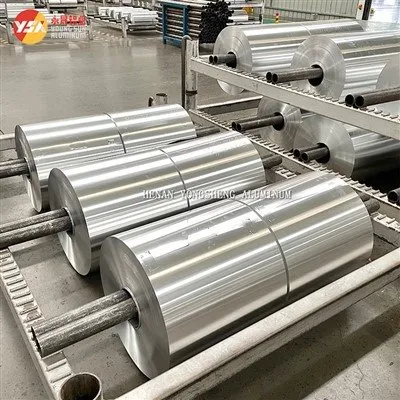
First, let’s start with the basics: aluminum’s natural resistance to heat isn’t just a marketing buzzword—it’s rooted in its atomic structure. Pure aluminum has a melting point of about 660 degrees Celsius (1220 degrees Fahrenheit), which is pretty impressive when you compare it to other common coil materials like steel, which starts to soften around 1510 degrees Celsius. Wait, hold on—before you think, “Great, pure aluminum can handle super high heat!”, there’s a catch: most aluminum coil rolls used in industrial applications aren’t pure. They’re alloyed, meaning small amounts of other metals like magnesium, manganese, or silicon are mixed in to boost strength, corrosion resistance, or workability. That alloying changes the heat resistance in ways that matter a lot for what our clients need.
Take our most popular 3000-series aluminum coil, for example. This is the stuff we ship to fabrication shops making kitchen equipment, heat exchangers, and HVAC components. It’s made with manganese as the main alloy, and its maximum continuous operating temperature is around 150 degrees Celsius (302 degrees Fahrenheit). That means it can sit in a steady oven or process line running at that temperature for years without warping, discoloring, or losing its structural integrity. I’ve seen this coil installed in restaurant pizza ovens’ inner linings for 12 years straight, and the only time we’ve had issues was when a client cranked their oven to 200 degrees Celsius by accident—way above its rating. It turned a dull gray, but it didn’t crack or collapse; it just lost a bit of its reflective finish, which is a separate quality feature.
Then there’s the 5000-series coil, which we supply to construction companies for roofing, siding, and industrial storage tanks. This alloy uses magnesium, and its heat resistance is a bit different. It can handle continuous temperatures up to 205 degrees Celsius (401 degrees Fahrenheit), and it actually holds up better than some other aluminum alloys when exposed to cyclic heat—like the daily swing of summer sun on a roof, where it heats up during the day and cools down at night. I talked to a roofing client in Arizona last month who’s been using our 5000-series coil for 8 years on a warehouse roof, and he told me that even after multiple record heat waves over 48 degrees Celsius, there’s no sign of buckling or fading. That’s the cyclic heat resistance at work—something that pure aluminum struggles with, because it expands and contracts more than alloys, leading to minor warping over time.
Now, let’s get to the high-end stuff: 6000-series aluminum coil. This is the go-to for clients working in automotive manufacturing, aerospace parts, and industrial furnace components that need to handle short bursts of extremely high heat, not just steady temperatures. The silicon and magnesium in this alloy make it harder, and its heat resistance tops out at around 315 degrees Celsius (600 degrees Fahrenheit) for continuous use, but it can survive short spikes up to 500 degrees Celsius (932 degrees Fahrenheit) without permanent damage. A few years back, we shipped a 6000-series coil to a aerospace parts supplier who was testing a new engine component prototype; the coil withstood 10 minutes at 550 degrees Celsius during testing, and when they measured its tensile strength afterward, it was still 95% of its original rating. That’s the kind of real-world data we rely on, not just lab numbers.
But here’s something most people don’t tell you about aluminum coil rolls: their heat resistance isn’t just about the alloy—it’s about the surface treatment, too. We offer several different coating options for our coils, and that coating can make a huge difference in how they perform under heat. For example, our polyester-coated coil is great for general use, but its maximum temperature rating is around 80 degrees Celsius, because the coating will start to blister and peel above that. That’s why we push our fluoropolymer-coated (like PVDF) coil for outdoor applications or projects that need more heat resistance. The PVDF coating can handle continuous temperatures up to 150 degrees Celsius, and short spikes up to 200 degrees Fahrenheit, and it doesn’t fade or degrade when exposed to UV heat from the sun. I’ve seen this coating hold up on a chemical plant’s vent stack linings for 10 years, even though the stack runs at 120 degrees Celsius every day. We also offer ceramic-coated aluminum coil, which is our highest-heat surface option—it can handle continuous temperatures up to 600 degrees Celsius, and is used for things like industrial kiln linings and barbecue grill components.
I want to be clear, though—no aluminum coil is indestructible, and the biggest mistake we see clients make is not matching the coil’s alloy and coating to their specific heat environment. Last year, a construction company bought a cheap pure aluminum coil from a competitor to use for a rooftop HVAC unit. Their thought was, “Aluminum is heat-resistant, right?” But in Phoenix, where their project was, the rooftop temperatures hit 50 degrees Celsius in the summer, and the pure aluminum coil expanded so much during the day that it pulled away from its mounting brackets and started to sag. That’s a classic example of not accounting for two things: alloy choice (pure aluminum expands more than alloys) and cyclic heat (daily temperature swings). The client ended up having to replace the entire coil with our 5000-series, which is rated for that area’s conditions. We didn’t make that sale—they went to a competitor who undersold them, but it ended up costing them more in the long run. That’s the kind of real-world lesson that makes us careful to educate every customer, not just sell them a coil.
Another common question: what about corrosion when heat is involved? A lot of clients assume that heat will make aluminum corrode faster, but that’s not exactly true. Aluminum forms a natural oxide layer when it’s exposed to air, and that layer actually gets stronger (and more corrosion-resistant) when exposed to moderate heat—up to about 200 degrees Celsius. Above that, the oxide layer can break down, making the aluminum more susceptible to corrosion if it’s exposed to moisture or chemicals. That’s why when we supply coils for industrial applications that use high heat, we always recommend pairing them with a proper coating to protect that oxide layer. For example, our ceramic-coated 6000-series coil is used in chemical processing plants where the air has high levels of sulfuric acid vapor, and it’s operated at 300 degrees Celsius—without the coating, the aluminum would corrode in a matter of months, but with it, it lasts decades.
Let’s also talk about how we test our coils for heat resistance, because that’s part of being a reliable supplier. We don’t just trust the manufacturer’s specs—we run our own in-house tests for every batch we ship. We take sample pieces from every coil roll, heat them in a controlled oven at different temperatures, measure their tensile strength before and after, check for warping or discoloration, and even test their coating integrity. Last quarter, we had a batch of 3000-series coil that came back from our test oven with a 10% drop in tensile strength when heated to 160 degrees Celsius—just 10 degrees above its rated limit. We rejected the entire batch, even though the manufacturer said it met specs. For us, that’s non-negotiable, because our clients rely on these coils to keep their operations running, and if a coil fails under heat, it can lead to costly downtime or safety issues.
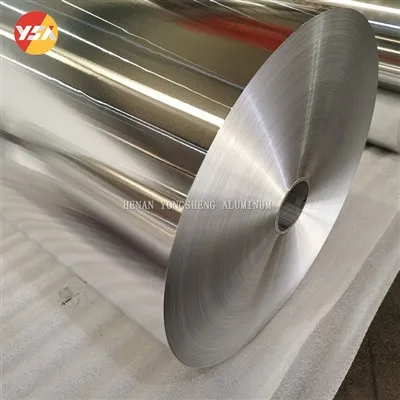
I’ve been in this business for 12 years, and the one thing I’ve learned is that aluminum coil rolls’ heat resistance is one of their most valuable features, but it’s not a one-size-fits-all trait. A coil that works great for a kitchen oven lining will fall apart on a high-temperature industrial vent. A coil that works for a rooftop in a mild climate won’t hold up in the Arizona desert. That’s why our team takes the time to talk to every customer about their specific application, their operating temperatures, whether they’re dealing with steady heat or cyclic swings, and if they need a coating for extra protection. We don’t just hand over a spec sheet—we share real stories from other clients, show them test data, and make sure they understand exactly what they’re getting.
Laminated Aluminum Foil If you’re in the market for aluminum coil rolls for a project that involves heat exposure, or if you’ve had a bad experience with a coil that didn’t hold up, I’d encourage you to reach out to us. We can walk you through the different alloy and coating options, share our real-world testing results, and help you pick the right coil for your needs. We’ve worked with small fabrication shops and large industrial facilities alike, and we take pride in making sure every client gets a coil that performs exactly as they need it to, especially when it comes to withstanding heat. Don’t settle for generic specs—ask about real-world performance, ask about test results, and ask for the kind of advice that comes from years of actually delivering these coils and seeing how they hold up. That’s the difference between a good supplier and one that cares about your project long-term.
References
- ASM International. (2005). Aluminum Alloys: Physical and Mechanical Properties. ASM Handbook Volume 2: Properties and Selection: Nonferrous Alloys and Special-Purpose Materials.
- American Architectural Manufacturers Association. (2018). Standard Specification for Aluminum Coil and Sheet for Architectural Applications.
- The Aluminum Association. (2020). Aluminum Design Manual: Properties and Applications for Aluminum Alloys in Construction.
- Kilicaslan, M. F., et al. (2017). “Effect of Heat Treatment on the Mechanical Properties of 5000-Series Aluminum Alloys.” Journal of Materials Engineering and Performance, vol. 26, no. 10, pp. 4892-4899.
Henan Yongsheng Aluminum Industry Co., Ltd.
We are one of the most reliable aluminum coil roll manufacturers and suppliers in China. With abundant experience, we warmly welcome you to buy high-grade aluminum coil roll for sale here from our factory. All custom made products are with high quality and competitive price.
Address: Gongyi City Industrial Cluster District, Huiguo Town, Gongyi City, Henan Province
E-mail: eric@ysaluminum.cn
WebSite: https://www.ysaluminummill.com/
