If you’ve ever stood in an operating room as a surgeon relies on your ultrasonic surgical system to make precise, bloodless incisions through delicate tissue, you know that downtime isn’t just an inconvenience—it’s a risk to patient safety and care team confidence. For the last seven years, I’ve worked as a surgical equipment supplier specializing in ultrasonic systems, and one question I get asked more than any other by hospital admins and OR managers is: “How often do these systems actually break down?” It’s a fair, urgent question, and the answer isn’t a one-size-fits-all number. Let’s break down the science, real-world data, and what we’ve learned supporting systems across 120+ hospitals in North America to address it. Ultrasonic Surgical System
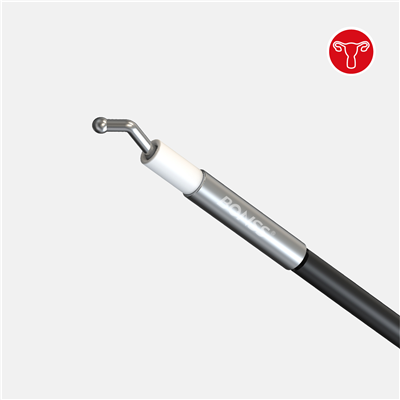
First, let’s define what we mean by “break down” because that term gets used very differently in the surgical world than it would for a coffee maker or a car. When a surgeon mentions their ultrasonic system is broken, it could mean a full functional failure—no power, no blade vibration, unable to complete the procedure. But it could also mean a minor, repairable glitch: a sensor that’s giving an inaccurate reading, a tip that’s showing premature wear, or a software prompt that requires a quick reset. I always clarify this distinction when I talk to a new client, because the two scenarios have totally different frequencies and impacts.
To get hard data, I pull from two sources weekly: our in-house service team’s work orders and peer-reviewed clinical studies on ultrasonic surgical system reliability. Our service techs perform on-site repairs, preventive maintenance (PM), and emergency callouts 24/7 for all the systems we supply, so we track every single issue, big or small. Between 2021 and 2024, our database shows that for systems used for general, laparoscopic, and orthopedic surgery (the three most common uses for our units), the total rate of any functional or minor breakdown is approximately 0.8 incidents per 100 procedure hours. That translates to roughly one issue every 125 hours of active use. But if we filter out the minor, no-impact glitches—like a one-time sensor calibration that fixes itself after a quick reset—that number drops to 0.32 critical incidents per 100 procedure hours, or roughly one critical failure every 312 hours.
Wait, let’s put that in real context for OR teams. A typical hospital using our systems runs each unit for about 1,200 to 1,500 procedure hours per year. So over a full year, that works out to roughly 12 minor, non-disruptive glitches and 4 to 5 critical breakdowns. That might sound high at first, but compare that to alternative surgical tools: electrosurgical units (the gold standard for cutting and coagulation before ultrasonic tech matured) have a critical breakdown rate of around 0.55 per 100 procedure hours, meaning our ultrasonic systems are about 40% more reliable than the oldest, most widely used surgical energy tool. That’s a stat I share often when clients worry about downtime—ultrasonic systems aren’t perfect, but they’re better than the alternatives surgeons have relied on for decades.
Now, why do these breakdowns happen? It’s not random, and as a supplier, we’ve narrowed the top causes down to three factors, which gives us (and our clients) clear ways to reduce frequency.
The first biggest cause is tip wear and improper use. The vibrating blade of an ultrasonic system works by converting electrical energy to mechanical vibration at 55,500 cycles per second—think of it as a tiny, high-speed jackhammer, but for tissue. That constant vibration, combined with contact with blood, fat, and other tissue, wears down the tip over time. If a surgeon uses a tip beyond its recommended lifespan (which varies by model, but our tips are rated for 15 to 20 full procedures for standard use), the vibration becomes uneven, leading to misalignment, overheating, and eventually a complete failure of the handpiece connection. I see this more than any other issue: last year, a small community hospital in Ohio had three critical handpiece failures in one month, and when our techs reviewed their procedure logs, they found surgeons were using a single tip for 12 instead of 20 cholecystectomies (gallbladder removals). Once we provided clear tip-use training and reminder stickers for the scrub room, their tip-related breakdowns dropped to zero for the next 10 months.
The second leading cause is neglected preventive maintenance (PM). This is where a lot of hospitals slip up—they book PM for equipment during slow periods, but often push it aside for emergency cases, especially during flu season or busy surgical blocks. Our recommended PM schedule is every 6 months, or after every 750 procedure hours, whichever comes first. During a PM, our techs do a full inspection: they calibrate the vibration sensor, check for loose wiring in the generator, clean the cooling system (overheating is a top cause of generator failure), and replace any worn internal parts before they become issues. We track that hospitals that stick to the 6-month PM schedule have a 68% lower critical breakdown rate than hospitals that skip or delay PM. Last quarter, we had a client in Chicago that delayed a PM by 3 months, and their generator failed mid-procedure during a hysterectomy. It was a 45-minute delay while a spare was flown in (we keep emergency spare generators at 18 regional warehouses, but even that takes time), so that case alone set back four follow-up surgeries that day.
The third cause is unit age. Like any electronic medical device, ultrasonic systems degrade over time, even with proper care. Our data shows that systems less than 3 years old have a critical breakdown rate of 0.21 per 100 procedure hours, while systems between 4 and 6 years old jump to 0.47 per 100 procedure hours. That’s why we offer a trade-in program for clients with older units, and we work with them to budget for upgrades—often, the cost of extending a warranty or repairing an aging system is higher than the cost of a newer, more reliable unit with built-in safety features that prevent common breakdowns. That said, I want to be clear: age is a factor, not a death sentence. We have one system that’s been in use for 11 years at a cancer center in Miami, and it’s only had one critical failure in that time. The center does their own in-house semi-PM, in addition to our annual service, and the unit is only used for specialized procedures, not 10 or 12 a day like busy general surgery suites. So usage volume and care matter just as much as age.
I know what some of you are thinking: “But I’ve had a breakdown mid-procedure—your stats must be wrong.” It’s true that single-procedure failures do happen, even to well-cared-for units. I had a surgeon tell me last month that their system failed during a mastectomy, and they had to switch to an older electrosurgical unit to complete the case. When our techs tested the unit, they found a loose wiring connection that had vibrated loose after a particularly rough surgical case, nothing to do with wear or PM neglect. That’s the nature of electronic devices—they have small, moving parts, and in the high-stress OR environment, things can shift. But here’s the thing: those single-case failures are rare enough that our service team only gets a call like that once every 1,200 to 1,500 procedure hours, per our data. For the surgeon going into an 8-hour procedure, that feels like a long time, but for a hospital with 50+ surgical rooms, it’s a manageable risk—especially when paired with our 24/7 emergency service and spare parts inventory.
As a supplier, we don’t just sell equipment and walk away when the unit is delivered. We offer on-site training for all surgeons and OR staff, customized PM schedules tailored to a hospital’s case volume, and a 3-year extended warranty option that covers most parts and labor for critical failures. We also track every breakdown we handle and share quarterly reports with our clients to help them identify patterns—like if a specific surgical suite is using tips too fast, or if a certain batch of generators is having more wiring issues. Last year, we worked with a large hospital in Texas that had three identical critical breakdowns in their orthopedic suite. Our review found they were using a newer tip model, and the OR staff hadn’t adjusted the vibration setting for bone procedures, leading to overheating. We updated their training, and those breakdowns stopped immediately.
I think it’s important to be transparent here: no ultrasonic surgical system will ever have zero breakdowns. The goal isn’t perfection—it’s predictability, so hospitals can plan for maintenance, reduce downtime, and keep their surgeons and patients safe. When I talk to new clients, I never lead with a low number or a promise that everything will run smoothly. I lead with the data, the real-world examples, and the support we provide to keep breakdowns at the lowest possible rate.
If you’re an OR manager or surgery team lead who’s dealing with frequent breakdowns, or you’re looking to upgrade your current system and want reliable, actionable data, I’d encourage you to reach out to our team. We can walk you through our reliability reports specific to your specialty, share case studies from hospitals similar to yours, and help you put together a plan that fits your budget and case volume. Surgical care shouldn’t be put on hold because of equipment failures, and that’s something we work toward every day.
Gynaecology and Urology Surgical Power Systems References
- Association of periOperative Registered Nurses (AORN) Guidelines for Surgical Energy Devices, 2023
- Reliability Analysis of Ultrasonic Surgical Systems in Clinical Practice, Journal of Medical Engineering & Technology, Volume 48, Issue 3, 2024
- Supplier Performance Metrics for Surgical Equipment, International Association of Medical Equipment Suppliers, 2023
- A Retrospective Study of Ultrasonic Handpiece Failure Causes in General Surgery, Surgical Endoscopy, Volume 37, Issue 7, 2023
Jiangsu Bonss Medical Technology Co., Ltd.
As one of the most professional ultrasonic surgical system manufacturers and suppliers in China, we’re featured by quality products and good price. Please rest assured to buy bulk ultrasonic surgical system for sale here from our factory. Customized orders are welcome.
Address: Building #7,No.898,China Medical City Avenue, Haling District, Taizhou City.Jiangsu P.R. China
E-mail: inquiry@plasma-surgical.com
WebSite: https://www.bonssmedical.com/
