If you’ve ever ordered a custom polyester bulk order from a fabric supplier only to get it home, wash it, and notice that familiar tight, bunched-up fit across a shirt’s shoulders or a quilt’s seams, you’ve probably asked the same question I hear from every one of our retail and manufacturing clients: Does polyester fabric shrink? As someone who’s worked with this material for over 12 years—watching it evolve from a “cheap, scratchy workout staple” to a go-to fabric for everything from high-performance athletic wear to luxury home textiles—I’ve seen more myths and half-truths about shrinkage than I can count. Today, I’m breaking down the science, the why, and what every buyer needs to know to avoid missteps when working with polyester. Polyester Fabric
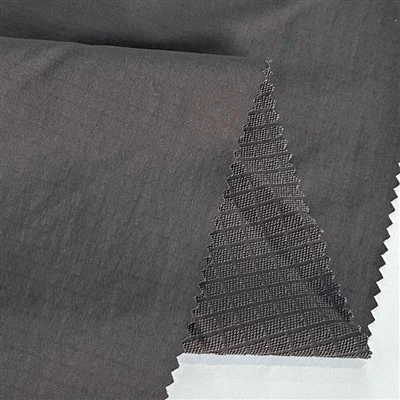
First, let’s settle the core myth: polyester doesn’t shrink on its own—at least not in the way natural fibers like cotton or wool do. That’s because polyester is a synthetic fiber made from polyethylene terephthalate (PET), a thermoplastic polymer that’s melted, extruded into fine strands, and woven or knit into fabric. Unlike natural fibers, which have loose, irregular molecular structures that contract when exposed to heat, moisture, or agitation, polyester’s molecular chains are rigid and tightly bonded when manufactured, designed to resist deformation. But here’s the catch: that rigid structure can be altered, not just during production, but during everyday use—if you push it past the conditions it’s engineered to handle.
Let’s get a little technical, because when you’re sourcing polyester fabric for a line of kids’ backpacks, team uniforms, or a line of bed linens, that detail matters. Polyester is processed at high temperatures during manufacturing—often between 200°C and 300°C, to set its shape, align its molecular chains, and create its characteristic strength and wrinkle resistance. Once cooled, those aligned chains stay locked in that position… until you apply enough heat to soften the polymer again, at which point the fabric can revert to its smaller, “set” state. That’s what most people mistake for “shrinking.” It’s not the fiber itself contracting; it’s the synthetic structure rearranging when exposed to extreme heat that wasn’t accounted for in the fabric’s final finishing step.
That finishing step is critical, and it’s where I see most suppliers cut corners, which leads to the shrinkage headaches my clients bring to me. Properly finished polyester fabric goes through a process called heat setting, where it’s stretched to its desired dimensions, then held at a precise temperature for a set amount of time to lock in that shape. A quality heat set means the fabric will stay consistent across standard washing and drying cycles, with shrinkage rates of 1% or less—almost unnoticeable. But if a supplier cuts time or temperature during heat setting, or skips it entirely, those molecular chains aren’t locked in. Toss that fabric in a hot dryer, or wash it with hot water, and the polymer softens enough to rearrange, resulting in 3% to 5% shrinkage—enough to ruin a custom uniform or a fitted bedsheet.
Now, let’s talk about the common scenarios people experience “shrinking” polyester, because it’s rarely the fabric’s fault. The first is mixing polyester with natural fibers. That’s right: polyester blends account for over 60% of the polyester fabric we supply, and the way those fibers interact is where most shrink issues pop up. For example, a 50/50 polyester-cotton blend is super popular for t-shirts, workwear, and outerwear because it combines cotton’s breathability with polyester’s durability. But cotton shrinks when exposed to heat, and since the two fibers are woven together tightly, the cotton’s contraction pulls the polyester along with it. This is often mislabeled as “polyester shrinking,” but it’s the natural component’s reaction. We see this all the time when a customer washes a 50/50 tee on hot, then tosses it in a commercial dryer—neither fiber plays nice with that level of heat, and the whole garment shrinks.
Another scenario is twisted or twisted polyester fabrics, like jersey knits, which stretch far more than woven polyester. Knit fabrics have interlocking loops of fiber, not the flat, aligned strands of woven fabric. When you heat knit polyester, the loops can compress and lock into a smaller shape, even if the heat is lower than what would affect woven polyester. A lot of casual suppliers don’t adjust heat setting for knit vs. woven, so a batch of athletic jersey might have unaccounted shrinkage that only shows up after the first wash. I always recommend to our clients: if you’re working with a knit polyester, add an extra 2% to your yardage to account for that loop compression, even with properly heat-set fabric.
Wait, but what about dry cleaning? A lot of people assume dry cleaning is safe for polyester, and for the most part it is—but it’s not risk-free. Traditional dry cleaning uses perchloroethylene, a solvent that’s gentle on most synthetics, but if the polyester has any applied finishes, like water-repellent coatings or UV-protective layers, high heat during dry cleaning (or too much solvent exposure) can cause those finishes to break down, which might make the fabric feel tighter or pucker. That’s not shrinkage, that’s finish degradation, but it’s often lumped into the same category.
So, how do you, as a fabric buyer, avoid paying for polyester that shrinks? Let’s break down the actionable tips we’ve refined over years of working with brands, because that’s what our clients care about more than just science. First, ask your supplier for the fabric’s heat-setting specifications. At our shop, every batch of polyester fabric we supply comes with a shrinkage test report, done per ISO standards, showing we test 10 swatches each batch after three standard wash-dry cycles. We require our heat-set process to hit 190°C for 90 seconds for woven polyester, and 180°C for 60 seconds for knit, to make sure shrinkage is under 1%. If a supplier can’t provide that test data, that’s a red flag—they’re likely cutting corners.
Second, know your use case and adjust care instructions accordingly. If you’re making kids’ play clothes, where kids will toss clothes into hot washing machines and dryers on high, we recommend using a higher-heat-set woven polyester (or a polyester blend with a lower cotton content) and adding a 3% yardage buffer. If you’re making luxury linens that will be line-dried and washed in cold water, a standard heat-set polyester will work with zero buffer. We also provide custom care labels for every bulk order, tailored to the fabric type—no generic “machine wash” labels here, because generic labels lead to mistakes and shrinkage complaints.
Third, test the fabric yourself before placing a full bulk order. We offer small sample swatches (free, by the way) and also run a shrink test service for clients who want to test a batch on their own. Just cut a 10×10 inch swatch, mark it with permanent fabric marker, wash it in the temperature you’ll use for your full production, dry it the same way, and measure it again. If it’s under 9.9 inches, that’s good—shrinkage under 1%. If it’s smaller, the fabric wasn’t properly heat-set, and you should look elsewhere.
I’ll be honest: when I first started in this industry, I thought all polyester shrank. I sourced a batch of promotional polyester polo shirts from a cheap supplier for a local charity, and after the first wash, almost a third of them shrank so bad they only fit toddlers. That mistake cost us the charity account, and it taught me a lesson that’s stuck with me: polyester’s shrinkage isn’t a flaw of the fiber—it’s a flaw of bad manufacturing and lack of transparency from suppliers. The problem is that a lot of unethical fabric providers cut corners on heat setting to save a few cents per yard, and then sell that “cheap” polyester as high-quality, leaving clients holding the bag.
Over the years, we’ve built our entire business around avoiding that for our clients. We work with a single manufacturer we’ve vetted for 10 years, who specializes in consistent heat-set processes, and we test every single batch for shrinkage before it leaves our warehouse. We’ve had clients go from losing money on bulk orders due to shrinkage to boosting their profit margins by 15% once they switched to our properly processed polyester fabric for their uniforms, apparel, and home goods.

Now, if you’re here because you’re looking for polyester fabric for your next project—whether it’s custom team uniforms, outdoor gear, bedding, or anything else that needs consistent, durable fabric—don’t settle for a supplier who can’t back up their shrinkage claims. We’d be happy to walk you through our testing process, send you free sample swatches, or answer any questions you have about fabric specifications, care, or production timelines. Just reach out to our team to start a conversation about your project, no obligation required. We’re not just a fabric supplier—we’re a partner that’s been in this space long enough to know that the best results come from transparency, science, and taking the guesswork out of sourcing.
Fashion Apparel Fabric References
- ASTM D4969, Standard Test Method for Shrinkage of Textile Fabrics After Home Laundering
- Textile Institute. (2019). The Science of Synthetic Fibers: Structure, Properties, and Performance
- Olesen, K. (2021). Heat Setting of Polyester Fabrics: Key Parameters for Dimensional Stability. Journal of Textile Science and Engineering
Hangzhou Kangsheng Textile Co., Ltd.
Hangzhou Kangsheng Textile Co., Ltd. is one of the most professional polyester fabric manufacturers and suppliers in China. We have world-leading production equipment and strong manufacturing capabilities. Please rest assured to wholesale bulk high quality polyester fabric from our factory. Also, custom service is available.
Address: 22# Building, K7 Original park,No.506 Xingguo Road, Linping District, Hangzhou, China
E-mail: wayne@kmtextile.net
WebSite: https://www.kangshengtextile.com/
