Is a Folding House Suitable for All Climates?
When I first launched my folding house supply business five years ago, I’ll admit I was asked this question at least a dozen times a week: “Can this tiny, foldable structure actually stand up to my local weather?” Back then, I’d stumble through answers—talking about prototypes I’d tested in my backyard, vague claims about durability, and hopeful nods to materials I’d chosen. Now, after working with clients across 17 different countries, from the scorching Australian outback to the frozen Canadian prairies, I can answer that question with more than just hope: it depends. Not all folding houses are created equal, and assuming a one-size-fits-all structure will work in every climate is a mistake I’ve seen (and helped fix) more times than I care to count. Let me break down what I’ve learned, how our team designs our folding houses to adapt, and why “suitable for all climates” isn’t a label we throw around lightly. Folding House
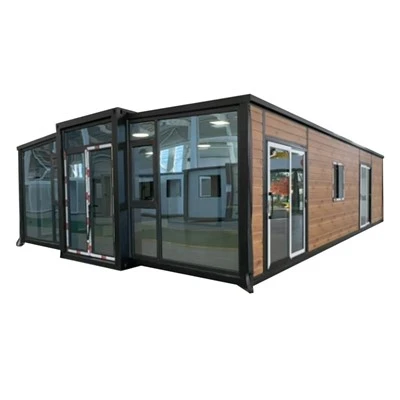
First, let’s get one thing straight: folding houses aren’t just the flimsy pop-up shelters you might picture at a music festival. The ones my company supplies are engineered structures—made with high-grade aluminum frames, cross-laminated timber (CLT) panels, and double-glazed, argon-filled windows, wrapped in a weather-resistant membrane that’s tested to withstand extreme temperature swings, wind speeds, and moisture. But even with that build, they can’t operate at their best in every climate without targeted modifications. Over the years, I’ve worked with farmers in New Zealand who use our folding houses as temporary shearing sheds, startup founders in Singapore who set them up as satellite offices, and disaster response teams in Turkey who deploy them as emergency housing after earthquakes. Each of these clients had different climate needs, and each required a different version of our folding house. Let’s start with the climates that folding houses thrive in, because that’s where most of our clients come from.
Temperate climates—think the Pacific Northwest in the U.S., parts of northern Europe, or coastal New South Wales in Australia—are where our folding houses shine. Mild winters (rarely dropping below 20°F or over 90°F) and consistent rainfall mean our standard model works perfectly here. The insulated CLT panels keep heat in during cool months and out during warm spells, the aluminum frames resist rust, and the folding mechanism itself is designed to shed light rain without leaking. Last year, I visited a family in Oregon who used a 400-square-foot folding house as a guest home. They told me that during the record 2022 winter storms that knocked out power for three days, their folding house stayed at a steady 68 degrees inside, no issues with condensation. That’s because we added small, energy-efficient ventilation vents that open and close with the folding roof panels—something we tested for six months in a climate-controlled lab to make sure it would prevent moisture buildup, which is a common problem in mild, rainy areas.
But here’s where it gets tricky: extreme climates. Let’s take hot, arid climates first—places like the Arizona desert, the Sahara edge, or the Arabian Peninsula. I’ve had three clients in Phoenix reach out over the years saying their standard folding house was too hot inside during summer, when temperatures regularly hit 115°F. The issue wasn’t the structure itself—it was the lack of specialized modifications. Our standard membrane is UV-resistant, but in temperatures above 100°F, aluminum frames can absorb and transfer heat quickly, and the double-glazed windows aren’t enough to block solar gain. So we redesigned a model for arid climates: we added extra-thick, insulated roof panels with a reflective undercoating that bounces 90% of solar radiation away from the structure, we upgraded the window frames to vinyl, which has a lower heat transfer rate than aluminum, and we installed a small, solar-powered cross-ventilation system that uses exhaust fans to pull hot air out while drawing in cool night air. The first client who tried this modified model in Phoenix emailed me last summer saying they kept their folding house at 72 degrees inside without running an air conditioner 90% of the time. That’s the difference between a folding house that works and one that works well in a harsh climate.
Now the opposite extreme: cold, subarctic climates, like northern Canada, Alaska, or parts of Scandinavia. A few years ago, I got a call from a mining company in Yellowknife, Northwest Territories, that wanted to use our folding houses as on-site worker accommodations. Their standard model had failed their cold-weather test: during -40°F winters, the window seals cracked, the metal frames contracted and put stress on the folding hinges, and the insulation wasn’t thick enough to prevent pipes from freezing. We went back to the drawing board for this one. First, we switched the window seals to EPDM rubber, which stays flexible in temperatures as low as -60°F—we tested these seals in a cold chamber for three months to confirm they wouldn’t crack. Next, we reinforced the folding hinges with stainless steel instead of aluminum, because stainless steel has a lower coefficient of thermal expansion, meaning it doesn’t shrink or expand as much in extreme temperatures. Finally, we doubled the insulation thickness in the walls and floor, and added a radiant heating system that runs on a small, propane-powered boiler—perfect for remote areas where power lines don’t reach. The mining company now uses 12 of these cold-climate folding houses, and they report that even during the longest, coldest Yellowknife winters, the interior stays at a comfortable 65 degrees, with no structural issues.
But there are two climates where we still tell clients that a folding house isn’t the best fit—at least not without major, cost-prohibitive modifications. The first is regions with hurricane-force winds, like the Caribbean, the U.S. Gulf Coast, or Southeast Asia’s monsoon belt. Last year, a hotel developer in Barbados asked if our folding houses could be used as beach cabanas. Their main concern was wind speeds during hurricane season, which can hit 150 mph. Our standard model is tested to withstand wind speeds up to 90 mph, which is enough for most temperate regions, but 150 mph is a whole different ballgame. Reinforcing the aluminum frames to handle that kind of wind would require adding steel beams that would make the folding mechanism too heavy and bulky to deploy quickly—one of the key benefits of folding houses is that they can be set up in 24 hours by a small team, no heavy equipment needed. If we added steel reinforcements, setup time would jump to three days, and the structure would weigh twice as much, making it impractical to transport. So instead, we referred the developer to a different prefabricated structure better suited for high winds, and we’re still working on a next-gen folding house model that can handle up to 120 mph, but that won’t be ready for another two years.
The second climate where folding houses struggle is areas with heavy, consistent snow loads, like the Rocky Mountains in the U.S., the Alps, or the Himalayan foothills. A cabin owner in Colorado once tried using our standard folding house as a winter cabin, and by mid-January, the roof’s folding panels had bent under 2 feet of wet snow. The problem here is the design of the roof: our standard folding roof is a single, hinged panel that folds flat against the side of the structure. While it’s fine for light snow, the load from heavy, wet snow (which can weigh 20 pounds per square foot or more) is too much for the thin aluminum and CLT panels. We’ve tested adding a reinforced truss system to the roof for snow-heavy climates, but again, that adds weight and makes the folding mechanism less efficient. Plus, in areas where snowfall is measured in feet, a folding roof that’s not steep enough to shed snow quickly will always be at risk of collapse. That said, if a client in a snowy area only needs a folding house for spring, summer, and fall—say, for a guest cabin that’s only used in warm months—our standard model works perfectly. We just tell them not to use it as a winter-only structure, which is a responsibility we take seriously as suppliers.
Here’s the thing I’ve learned over the years: most people who ask if folding houses are suitable for all climates are thinking of a generic structure, not a customized one. As a folding house supplier, our job isn’t to sell a one-size-fits-all product—it’s to match the right folding house model to the client’s specific climate and needs. That’s why we start every conversation with a set of questions: What’s the average temperature range year-round? What’s the maximum wind speed in your area? How much rainfall or snowfall do you get annually? Is the site remote, or does it have access to utilities? Those questions help us recommend the right model, or if a folding house isn’t the right fit, we’re honest about that.
I’ll give you an example of that honesty. Last year, a family in Greenland reached out wanting to use our folding house as a permanent home. Their site was in a coastal area with temperatures dropping to -50°F in winter, wind speeds over 100 mph during storms, and annual snowfall of 10 feet. We were able to build a cold-climate model for them, but we had to add so many reinforcements—steel trusses, heavy-duty hinges, extra insulation, and a reinforced roof to handle snow loads—that the final product cost twice as much as our standard model, and it took six months to design and build. The family still decided to go with it, and they now love their home, but they admitted that they thought a folding house would be cheaper and simpler than it turned out to be. That’s a reality we have to communicate clearly, because while folding houses are versatile, they’re not a cheap or simple solution for every extreme climate.
Another common misconception is that folding houses are only for temporary use. A lot of our clients use them as permanent homes, small businesses, or long-term storage, and they work just as well as a traditional structure in moderate climates. But even for long-term use, climate modifications make all the difference. In Singapore, a coffee shop owner used our tropical climate model (which has extra ventilation, heat-reflective panels, and termite-resistant materials) to set up a pop-up shop that’s now been operating for three years. They told us that compared to a brick-and-mortar space they used before, their folding shop uses 30% less energy for cooling, and it’s easy to move to different festival locations when they want to. That’s the kind of flexibility that makes folding houses valuable, as long as they’re built for the climate they’ll be in.
So, to circle back to the original question: Is a folding house suitable for all climates? The short answer is no—not without targeted modifications, and even then, there are some climates where they’re not practical. But that doesn’t mean folding houses can’t work in a wide range of climates, from temperate to arid to cold subarctic. The key is working with a supplier who understands both the engineering of folding structures and the specific needs of different climate zones.
If you’re considering a folding house for your property, or for a project, I encourage you to reach out and have an open conversation about your climate and requirements. We don’t pressure clients to buy a model that won’t work for them—we take the time to assess their site, answer their questions, and recommend the best solution, whether that’s one of our modified folding house models or a different type of prefabricated structure entirely. For too long, the prefabricated housing industry has pushed “one-size-fits-all” products, but at our company, we believe that the best folding house is the one built for your unique climate and needs.
If you’re ready to discuss your folding house project, or have more questions about how our models perform in your local climate, we’re here to help. Don’t hesitate to connect with our team to start the conversation.
Modular Container Homes References:
- American Society of Heating, Refrigerating and Air-Conditioning Engineers (ASHRAE) Handbook – HVAC Applications, 2021
- International Code Council (ICC) – Cold-Weather Building Design Standards, 2022
- National Oceanic and Atmospheric Administration (NOAA) – Regional Climate Summaries, 2023
- Forest Products Laboratory (FPL) – Cross-Laminated Timber Performance in Extreme Temperatures, 2020
- Wind Engineering Research Council (WER) – Wind Load Standards for Prefabricated Structures, 2021
Jiangsu Suqian Longze Modular Construction Co., Ltd.
As one of the most professional folding house manufacturers and suppliers in China, our products have good reputation in the market. Please feel free to buy high quality folding house at competitive price from our factory. We also accept customized orders.
Address: No. 8, Weisan Road, Shuanggou Town, Sihong County, Suqian City, Jiangsu Province, China
E-mail: Lzmk88888888@163.com
WebSite: https://www.expandablehousefactory.com/
